Delta Flight DL275 from Detroit to Tokyo-Haneda diverted to Los Angeles after a reported engine anti-ice system issue. Here is what happened, why LAX was chosen, and what the incident shows about aviation safety.
Delta Flight DL275 Diverted to LAX: The Key Facts
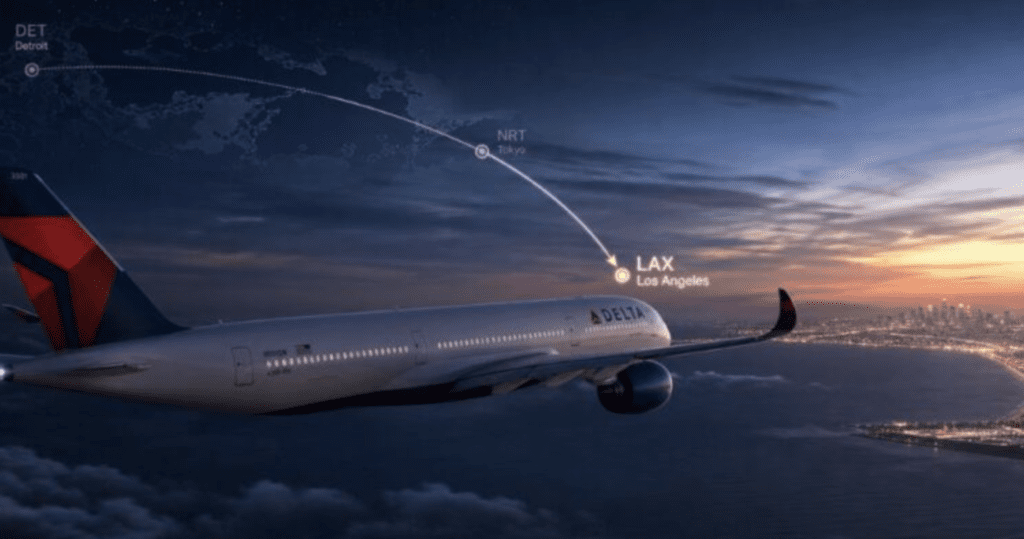
Delta Flight DL275 became a widely searched topic after the Detroit-to-Tokyo-Haneda service was diverted to Los Angeles International Airport. The flight was operated by an Airbus A350-900, registration N508DN, and public aviation coverage linked the diversion to a reported engine anti-ice system issue. The aircraft landed safely at LAX, and the event was treated as a precautionary technical diversion rather than an accident.
This incident attracted attention because DL275 was not scheduled to fly to California. It was a long-haul transpacific service bound for Japan, making the reroute to Los Angeles notable for passengers, aviation enthusiasts, and those tracking the flight online.
What Happened to Delta Flight DL275?
Delta Flight DL275 departed from Detroit Metropolitan Wayne County Airport for Tokyo-Haneda Airport, one of the airline’s major international routes. During the journey, the crew identified a technical concern reportedly involving the aircraft’s engine anti-ice system. Instead of continuing across a remote long-haul segment, the crew diverted the flight to Los Angeles International Airport for inspection and operational support.
The decision reflected standard aviation risk management. On long international flights, even a system issue that does not immediately threaten the aircraft may justify a diversion when it affects safety margins for the route ahead.
Why Did Delta Flight DL275 Divert to LAX?
Public reporting connected the diversion to an engine anti-ice system problem. Aircraft flying at cruising altitude often encounter very low temperatures, and anti-ice systems are designed to help prevent ice accumulation on engine-related surfaces and other critical components.
A technical warning involving that system does not automatically mean an engine failure occurred. However, on a long overwater journey, such an alert can reduce the margin for safe continuation, especially if the flight is heading toward more remote airspace. In those situations, diverting to a suitable airport is often the most conservative and safety-focused choice.
Understanding the Engine Anti-Ice System
The engine anti-ice system should not be confused with ground de-icing performed before departure during winter weather. Ground de-icing removes frost, snow, or ice from aircraft surfaces before takeoff, while in-flight anti-ice systems help prevent hazardous ice buildup during flight.
The FAA explains that airplanes approved for icing conditions must be able to protect key systems, including engines, from ice accumulation. That is why any reported issue involving anti-ice protection deserves careful attention from the flight crew.
Why Los Angeles Was a Practical Diversion Airport
LAX was a logical diversion point for a wide-body international aircraft. The airport can accommodate large long-haul jets, offers significant passenger handling capacity, and supports major international airline operations. The original article also highlighted LAX as a practical choice for landing, inspection, and onward passenger support.
For a flight such as DL275, a diversion airport needs to do more than provide a runway. It must also support aircraft servicing, crew coordination, passenger rebooking, and possible overnight disruption management. That broader operational capacity is one reason a major hub can be favored over a smaller airport.
The Aircraft Involved: Airbus A350-900 N508DN
The diverted aircraft was an Airbus A350-900, registration N508DN. Delta uses the A350-900 on premium long-haul international routes, and the aircraft type is built for extended-range operations. Flightradar24 identifies N508DN as a Delta-operated Airbus A350-941, while Delta’s own fleet materials confirm the A350-900’s role in its international network.
Aircraft type matters during a diversion because maintenance capability, parts access, and technical expertise can influence where crews and airline operations teams prefer to land. In practical terms, the right diversion airport helps reduce delays and supports a faster technical assessment.
Safety Systems Are Designed to Detect Issues Early
One of the most important lessons from the DL275 diversion is that modern aviation safety depends on identifying technical issues before they escalate. Aircraft monitoring systems provide crews with warnings and alerts that guide decision-making during flight.
The crew’s decision to divert fits the broader aviation principle that a precautionary landing is not a failure of the system. It is the system working as intended: detect, assess, and respond before the situation becomes more serious.
Passenger Experience After the Diversion
For passengers, a diversion from a Tokyo-bound flight to Los Angeles can be stressful. Travelers may face missed connections, itinerary changes, hotel needs, and uncertainty about when they will continue their journey.
In situations like this, airlines typically focus on rebooking, meal support, lodging where necessary, and timely communication. Even when the aircraft lands safely, passengers still need clear next-step information.
Why Communication Matters During a Diversion
Technical diversions can sound alarming to passengers, especially when they occur several hours into an international flight. Clear communication from the cockpit and airline support teams helps reduce confusion and maintain trust.
Explaining that a diversion is being made out of caution, rather than because of an unfolding emergency, can make a major difference in how passengers understand the situation.
What the DL275 Diversion Shows About Aviation Safety
The Delta Flight DL275 diversion to LAX is best understood as a case study in precautionary decision-making. The flight did not continue toward Tokyo after a reported technical concern emerged; instead, it landed at a large, capable airport where the aircraft could be checked and passengers could be supported.
That matters because aviation safety is not only about responding to emergencies. It is also about making conservative choices before a developing issue becomes more difficult to manage.
A Diversion Is a Safety Tool, Not a Failure
Flight diversions are often misunderstood by the public. While they disrupt travel plans, they are also one of the clearest examples of safety procedures doing their job. When pilots decide that a different airport offers a better operational path, schedule becomes secondary to safety.
The DL275 case reinforces that point. The crew chose a safer, more manageable option rather than continuing a long transpacific flight with an unresolved system concern.
Long-Haul Flights Require Extra Caution
Long-distance international flights cross remote regions and may spend hours far from major diversion airports. Because of that, crews evaluate technical faults differently than they might on a short domestic route. A problem that is manageable near multiple airports may require a more cautious response before entering a long oceanic segment.
That is why the Delta DL275 diversion drew attention: it illustrates how route length, aircraft systems, and access to support airports all shape real-time aviation decisions.
Final Thoughts
The Delta Flight DL275 diverted LAX incident became widely discussed because it involved a major international route, a long-haul aircraft, and a significant reroute from Detroit-to-Tokyo service into Los Angeles. Public coverage linked the diversion to a reported engine anti-ice system issue, and the aircraft landed safely in California.
More importantly, the episode demonstrates how modern aviation prioritizes prevention. The crew’s decision to divert, the choice of a capable airport, and the handling of the event all point to a safety culture built around acting early rather than taking unnecessary risks.
FAQs
What was Delta Flight DL275?
Delta Flight DL275 was a Delta Air Lines service operating from Detroit Metropolitan Wayne County Airport to Tokyo-Haneda Airport.
Why did Delta Flight DL275 divert to LAX?
Public aviation reports linked the diversion to a reported issue involving the aircraft’s engine anti-ice system.
Was Delta Flight DL275 an emergency landing?
The available reporting describes it as a precautionary technical diversion rather than an accident. The flight landed safely at LAX.
What aircraft operated Delta Flight DL275?
The flight was operated by an Airbus A350-900, registration N508DN.
Why is the engine anti-ice system important?
Engine anti-ice systems help reduce the risk of ice accumulation on critical components during flight in cold atmospheric conditions.
Why did the flight go to Los Angeles instead of continuing to Tokyo?
The diversion to LAX provided a practical option for landing, inspection, and passenger support after the reported technical issue.
Were passengers injured?
The source article states that no injuries were reported in connection with the diversion.